
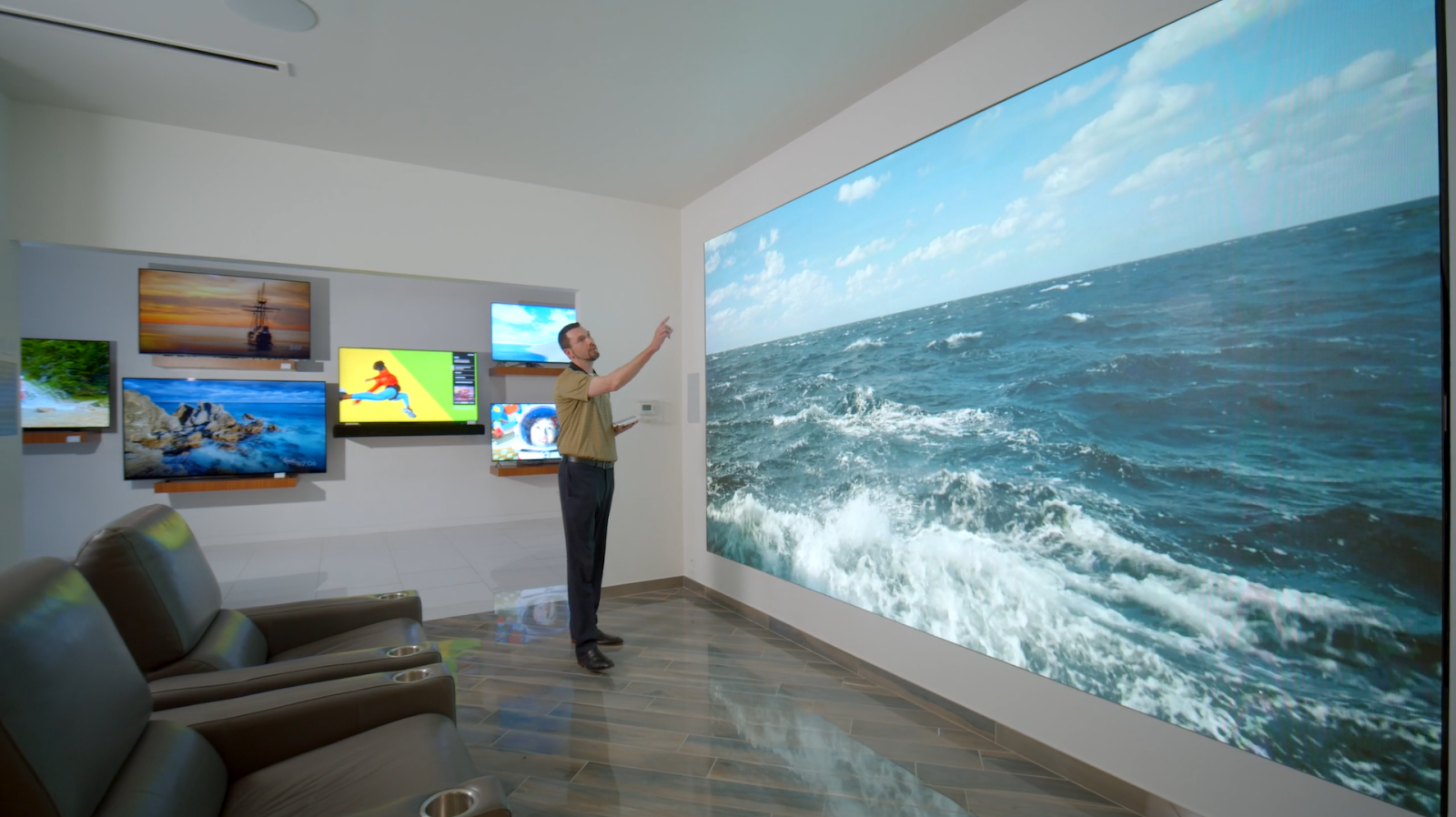
See when a video wall makes sense for home theaters, sports rooms, and multi-game viewing, plus what to plan before installation.
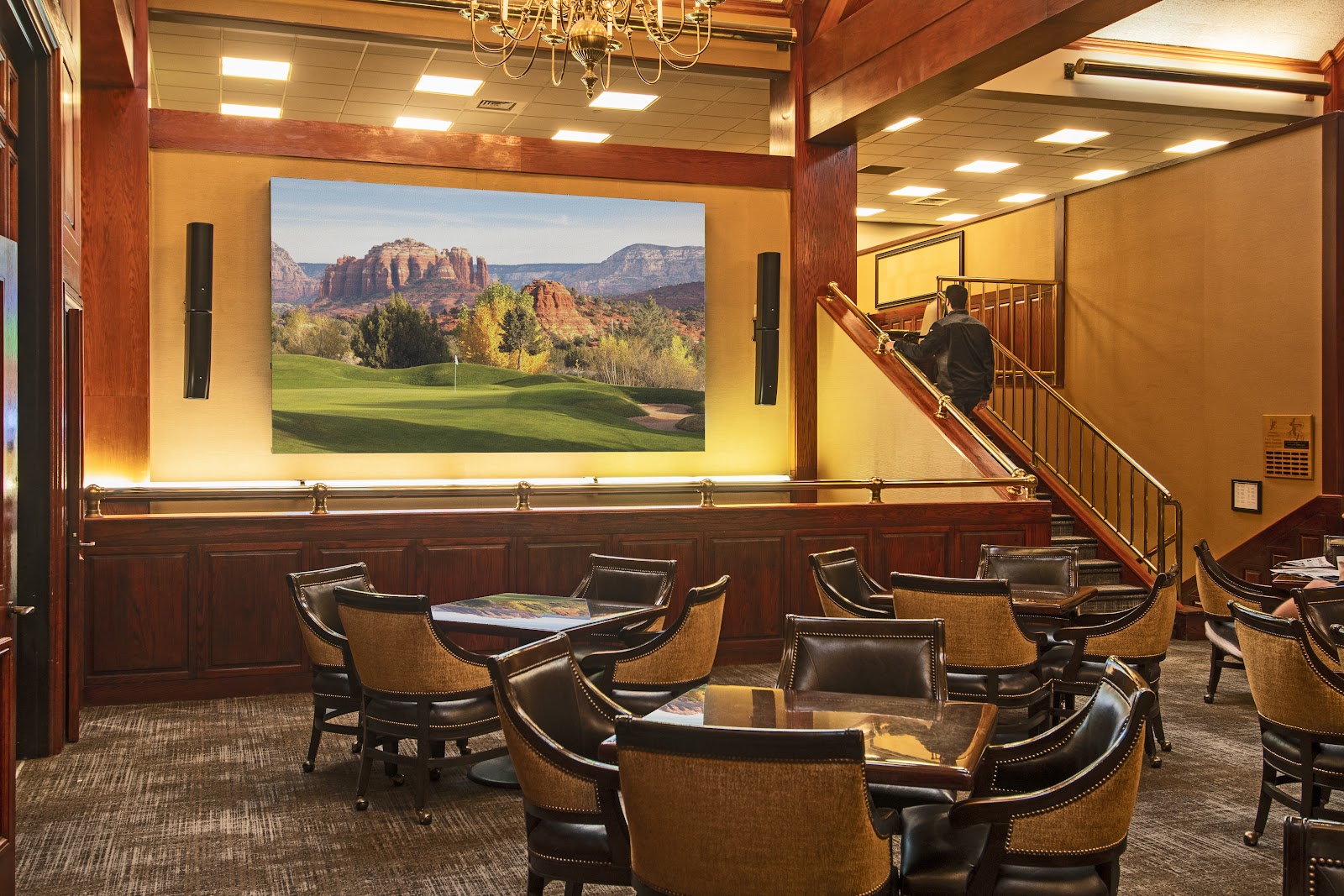
A large-format video wall can turn a bar, media room, or game-day space into a true multi-screen experience.
A video wall sounds extravagant until you picture the real use case: four football games on at once, a live golf tournament beside the leaderboard, or a movie-night screen large enough to feel architectural instead of temporary. That is where the idea starts to make sense for the right home.
The hot take: the biggest advantage is not only size. It is flexibility. A well-designed video wall can behave like one dramatic large screen, several smaller screens, or a mixed-use display for sports, movies, gaming, and entertaining.
A video wall is a custom large-screen display system made from multiple panels or direct-view LED modules that work together as one viewing surface. For homes, it is best suited to media rooms, sports bars, golf simulator lounges, and open entertaining spaces where one standard TV feels too small or too limited. The real value is multi-view control: you can watch one game at full scale or divide the screen into several feeds without filling the wall with separate TVs.
“The clients who get the most from a video wall are usually not asking for a bigger TV. They’re asking for a room that handles how they actually entertain — game days, family movie nights, golf, gaming, and parties without the room feeling improvised.”
— David Pidgeon, CEO & President of Starpower
What is a video wall?
A home video wall is a large display built from multiple screens, panels, or direct-view LED tiles that are controlled as a single system. In a commercial setting, you see them in stadiums, control rooms, retail spaces, and hospitality venues. In a home, the goal is more personal: scale, clarity, and control without making the room feel like a sports book.
There are a few common approaches:
-
Multiple premium TVs arranged together: Often used for sports-heavy rooms where different games or sources matter more than a perfectly continuous image.
-
Direct-view LED or MicroLED-style systems: Modular displays designed to create a very large image with minimal visible separation between panels. Samsung’s The Wall, LG MAGNIT, and Sony Crystal LED are examples of this broader category.
-
Large-format TV or projection alternative: Sometimes the right answer is not a video wall at all. A large Sony, Samsung, or LG display, or a projection system from brands such as Epson or JVC, may deliver a cleaner result for movie-first rooms.
In our experience, the right format depends less on the advertised size and more on how the room will be used on an ordinary weekend.
Why would someone choose a video wall instead of one large screen?
One large screen is usually simpler. A video wall wins when the room needs to do more than one thing at once.
For sports, that advantage is obvious. You can put the Cowboys game in the largest window, keep two college games running on the side, and add a golf broadcast or fantasy scoreboard without asking everyone to stare at phones. For families, it can mean a movie on one side and a game console on the other during casual gatherings. For entertaining, it becomes a focal point that adapts to the night instead of locking the room into one layout.
The most common mistake we see is starting with the question, “How big can we make it?” A better first question is, “What do we want this wall to do?”
Where does a video wall work best?
A video wall is strongest in rooms where scale and social viewing matter.
-
Sports and media rooms — Multiple live feeds make the space feel built for game day.
-
Home bars and lounges — A large display above a bar can anchor the room without adding several separate TVs.
-
Golf simulator spaces — Golf content, swing data, leaderboards, and entertainment feeds can all have a place.
-
Large open living areas — A standard TV may feel undersized when seating is spread across the room.
-
Outdoor-adjacent entertaining spaces — The screen can support pool days, watch parties, and casual evenings when the room connects to a patio.
The room does not have to be flashy. It does have to be planned. Sightlines, glare, speaker placement, ventilation, service access, and control all matter before anyone orders equipment.
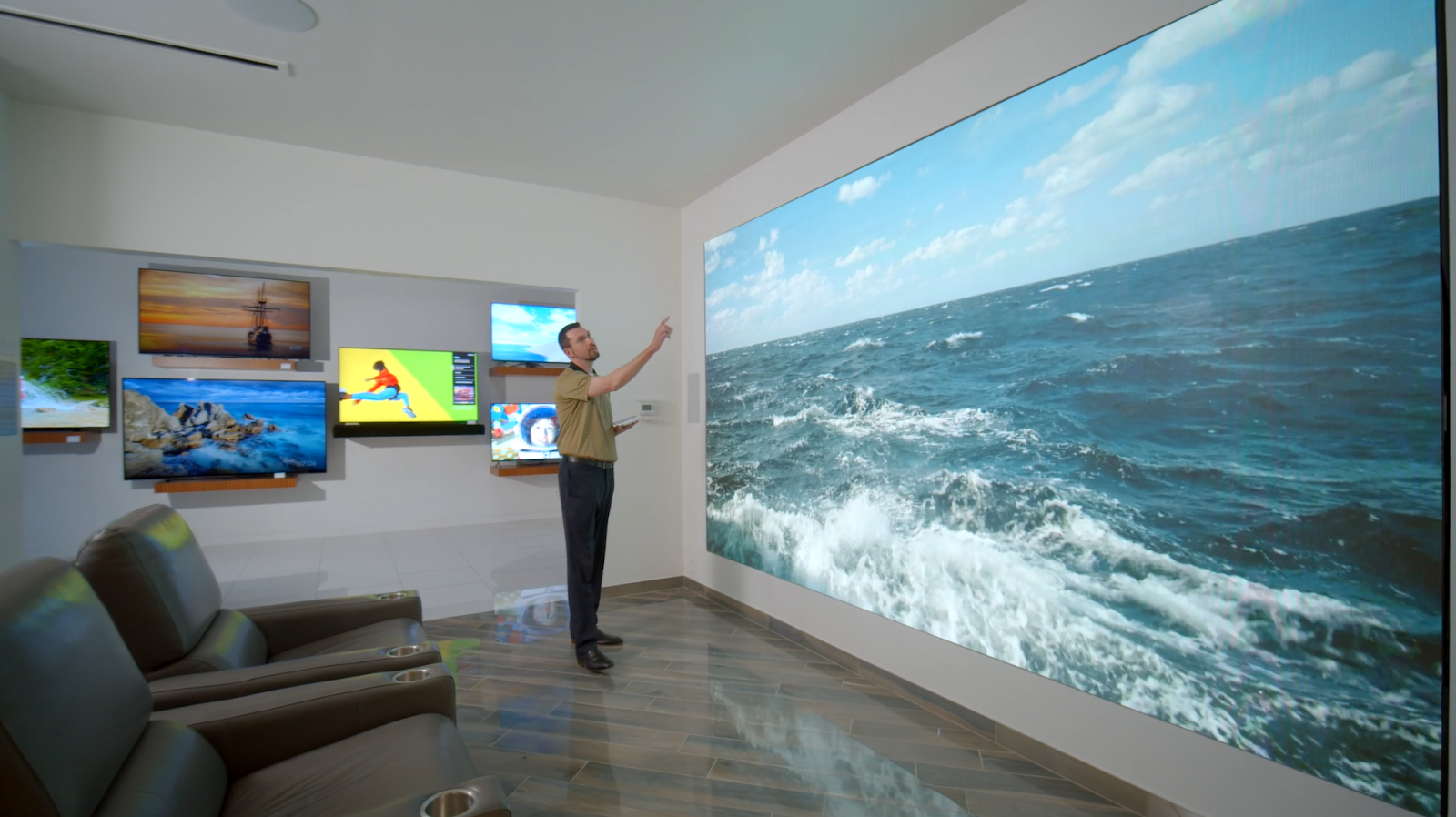
Seeing large displays and source control in a showroom helps clarify whether a video wall or one large screen is the better fit.
Video wall vs. large screen: which is better?
The honest answer: a video wall is not automatically better. It is better for certain rooms and viewing habits.
|
Option |
Best fit |
Main advantage |
Watch-out |
|---|---|---|---|
|
Video wall |
Sports rooms, bars, multi-use entertainment spaces |
Multiple sources at once; dramatic scale |
Needs careful design, control, and service planning |
|
One large TV |
Living rooms and cleaner media rooms |
Simple operation and strong picture quality |
Limited multi-view flexibility |
|
Projection system |
Dedicated theater rooms |
Cinematic scale for movies |
Room light control and screen selection matter |
|
Separate TVs |
Casual sports bars or budget-conscious upgrades |
Easy to understand and replace |
Can look cluttered without design planning |
For a movie-first theater, we often lean toward one carefully chosen display or projection system with proper audio, lighting control, and seating. For a sports-first room, a video wall can be the more exciting and useful answer because it lets the room change with the event.
That difference matters.
What should you plan before installing a video wall?
A video wall is not a product you simply hang and connect. It is a system. Behind the scenes, the design work determines whether it feels refined or frustrating.
Use this planning checklist before you commit:
-
Viewing distance: The closer the seats, the more panel quality and pixel pitch matter.
-
Room lighting: Bright rooms, windows, and reflective finishes affect the display choice.
-
Source count: Decide how many feeds you want at once: cable boxes, streaming devices, gaming consoles, cameras, golf systems, or computers.
-
Audio plan: Multi-screen viewing still needs a clear main audio strategy, especially for sports.
-
Control system: Crestron, URC, or another control platform can make layouts, sources, volume, and lighting easy to manage.
-
Network and wiring: Large-screen rooms rely on stable infrastructure, not hope.
-
Service access: Panels, processors, mounts, ventilation, and cabling should be reachable later.
-
Interior design: The wall should look intentional when the screen is on and when it is off.
One thing most people do not realize is that the processor and control experience can matter as much as the display. If changing from “four games” to “movie night” requires three remotes and a patient teenager, the system has missed the point.
“My recommendation is to design the experience first and choose the hardware second. Once we know the seating, the lighting, the number of sources, and the way the family watches, the right display path becomes much clearer.”
— David Pidgeon, CEO & President of Starpower
How does a video wall fit with sound, lighting, and seating?
A large screen makes the first impression. The rest of the room determines whether people stay.
For sports, clear dialogue and crowd noise matter. For movies, front speakers, subwoofers, surrounds, and acoustic planning shape the experience. In rooms where the display sits above a bar or fireplace, the audio design may need in-wall speakers, architectural speakers, or a calibrated surround system that works with the room instead of fighting it.
Lighting control is just as important. Lutron or Ketra lighting scenes can shift the room from “pregame gathering” to “main event” without leaving guests in the dark. Motorized shades can reduce glare during afternoon games. Seating needs to match the use, too: theater recliners for a dedicated room, sectional seating for a family media room, or bar seating for a watch-party setup.
A video wall should feel connected to the whole room, not bolted onto it.
What brands and technologies should homeowners know?
The premium display category keeps moving, so current product names and availability should always be verified during a consultation. Still, several names come up often in large-screen conversations.
Samsung’s The Wall is part of the MicroLED display category and is known for modular large-format installations. LG MAGNIT includes MicroLED and direct-view LED options, including residential-focused large screens. Sony Crystal LED is another premium modular display platform used for large-scale visual installations. For many homes, premium OLED, Mini LED, or large-format displays from Sony, Samsung, and LG may also be a better fit than a full modular wall.
The practical takeaway is simple: do not shop this category from a spec sheet alone. See the options, talk through the room, and compare the experience from your actual viewing distance.
Is a video wall worth it for watching multiple football games?
If watching multiple games is the reason you are considering it, a video wall may be one of the few upgrades that genuinely changes how the room works.
A single large screen is excellent for one event. A video wall is built for the Saturday or Sunday when no one agrees on the one event. It can turn a media room into the place where the early game, late game, red-zone-style coverage, and a rivalry matchup can all stay visible. That is not a minor convenience. For the right household, it is the reason the room gets used more often.
The best result comes from designing simple presets:
-
Movie Night: One full-screen source, lights low, surround sound active.
-
Game Day: Main game large, supporting games smaller, brighter lighting near the bar.
-
Golf Mode: Tournament feed, simulator data, or course visuals arranged for the room.
-
Party Mode: Music, visuals, sports, and ambient lighting balanced for guests.
Those presets are where a custom system earns its keep. The technology fades into the background because the room responds the way you expect.
What is Starpower’s recommendation?
Our recommendation is to start with the room, not the screen. Bring the floor plan, a few photos, and a clear idea of how you want to use the space. If the goal is one unforgettable movie image, we may guide you toward a large display or projection system. If the goal is sports, entertaining, and multiple sources at once, a video wall deserves a serious look.
Starpower designs and installs home theater, media room, lighting, audio, and control systems across the Metroplex, with showrooms in Mockingbird Station, North Dallas, Southlake, and Scottsdale/Phoenix. Visit a Starpower showroom or schedule a consultation to experience large-screen options firsthand and plan a system tailored to your home.
“A great video wall should not feel complicated. It should feel like the room finally matches the way you watch, host, and relax.”
— David Pidgeon, CEO & President of Starpower
FAQ
How big can a home video wall be?
A home video wall can be designed at many sizes because modular panels can be configured for the room. The right size depends on viewing distance, wall dimensions, resolution needs, seating layout, and how many sources you want visible at once.
Can a video wall show multiple football games at the same time?
Yes. Multi-view layouts are one of the strongest reasons to consider a video wall. With the right sources, processor, and control system, you can display one game large and several other games in smaller windows.
Is a video wall better than a projector for a home theater?
Not always. A projector can be an excellent choice for a dedicated, movie-first theater with good light control. A video wall is usually better for bright, social, multi-use rooms where multiple sources and high impact matter.
Does a video wall need special wiring?
Yes. A clean installation may require power planning, signal cabling, network infrastructure, ventilation, mounts, control equipment, and service access. Planning those details early is much easier than trying to retrofit them after finishes are complete.
Where can I see a video wall or large-screen home theater options in Dallas?
You can visit Starpower’s showrooms in Mockingbird Station, North Dallas, and Southlake to compare large displays, home theater systems, lighting control, audio, and room-design options in person.
