
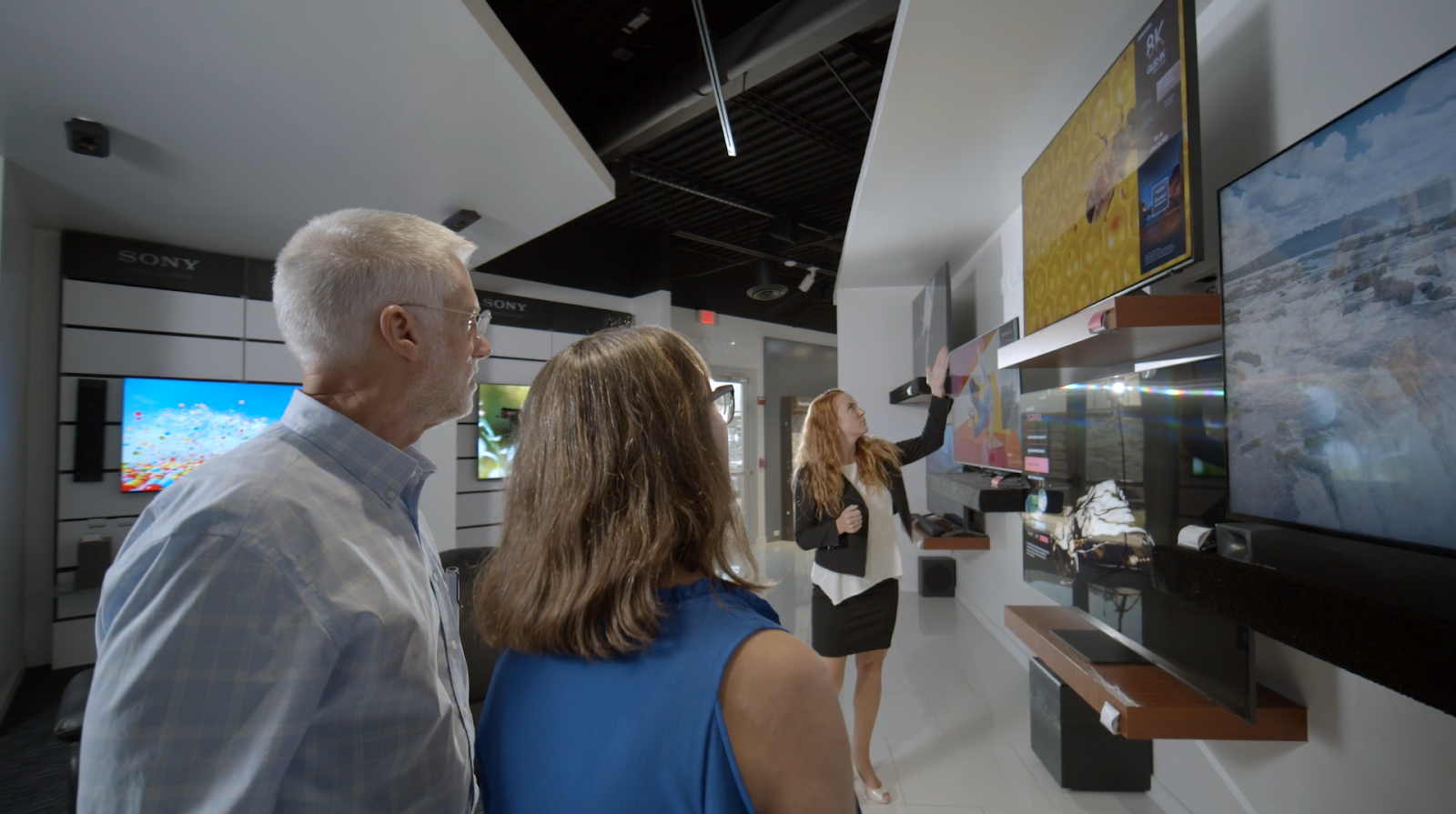
OLED, Mini-LED or Micro RGB? Starpower explains the 2026 TV choice for Dallas-area home theater buyers, with tips on brightness, rooms and calibration.
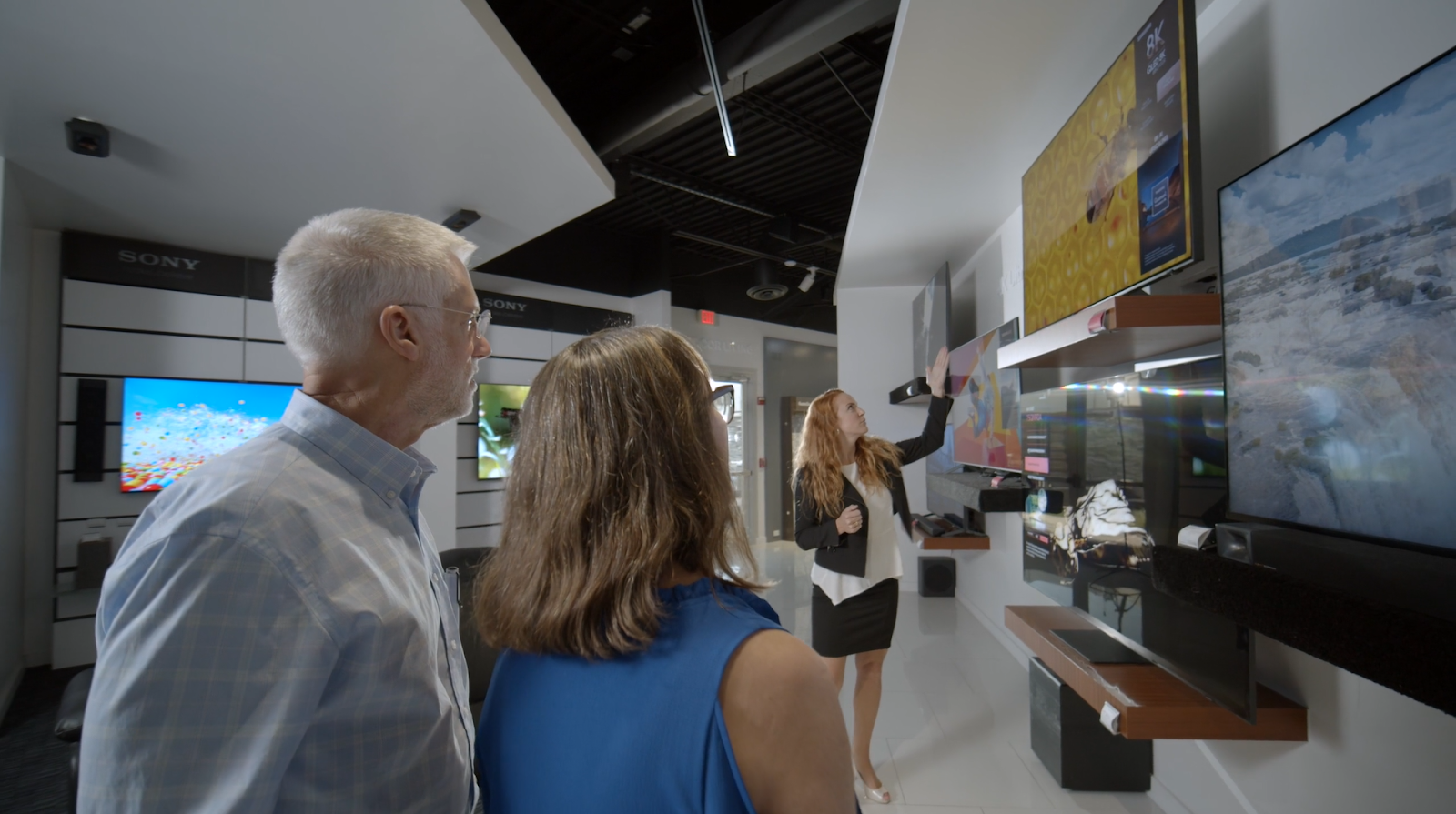
Seeing a premium display in person helps you judge brightness, motion, color and room fit before you commit.
OLED vs. Mini-LED vs. Micro RGB is suddenly the TV question serious home theater buyers are asking in 2026. The short version: OLED still wins for black level and movie-night contrast, Mini-LED is often the safer choice for bright rooms and sports, and Micro RGB is the exciting new branch of high-end LCD technology that deserves a demo before you buy.
Direct answer: Choose OLED if you want the most cinematic picture in a controlled-light room. Choose Mini-LED if your family room gets daylight, you watch a lot of sports, or you want a very large screen with strong brightness. Consider Micro RGB if you’re comfortable buying newer display technology and want the color benefits manufacturers are pushing after CES 2026 — but judge it in person, not from a spec sheet.
Why is everyone comparing OLED vs. Mini-LED vs. Micro RGB in 2026?
The 2026 TV conversation changed because manufacturers are not just making screens brighter. They’re changing how high-end LCD TVs create color and light.
RTINGS called its 2026 TV overview “The Year Of RGB Mini LED.” LG’s 2026 TV launch page lists OLED, QNED Mini LED and Micro RGB models in its upcoming lineup. Yahoo Finance’s CES coverage also reported that Samsung and LG were using new TV technology to chase brighter color and better image quality.
That news creates a real buying problem. If you’re upgrading a media room, a living room display, or a dedicated theater, last year’s advice may not be enough.
Here’s our take: the panel matters, but the room matters more. We often see buyers focus on the logo on the box while the bigger difference comes from lighting, viewing distance, screen size, mounting height, sources, network performance and calibration.
“My first question is rarely, ‘Which TV has the most impressive spec?’ It’s, ‘Where is this going, how bright is the room, and what do you actually watch?’ That answer tells us more than the brochure does.”
— David Pidgeon, CEO & President of Starpower
What’s the practical difference between OLED, Mini-LED and Micro RGB?
OLED, Mini-LED and Micro RGB can all look excellent. They just solve the picture problem in different ways.
|
Technology |
How it works |
Where it shines |
Watch-outs |
|---|---|---|---|
|
OLED |
Each pixel makes its own light and can turn fully off. |
Deep blacks, movie contrast, clean viewing angles, dark rooms. |
Very bright rooms, static graphics and some ultra-large-size decisions need a closer look. |
|
Mini-LED |
An LCD panel uses many small backlight zones with local dimming. |
Brightness, sports, daytime viewing, larger screens and family rooms. |
Local dimming quality varies; poor processing can create haloing around bright objects. |
|
Micro RGB |
An advanced LCD backlight uses red, green and blue light sources instead of a more traditional single-color backlight approach. |
Potentially richer color volume and high brightness in premium LCD designs. |
Newer category; demos, reviews and room-by-room fit matter before buying. |
Micro RGB is not the same thing as a modular MicroLED wall. For most homeowners, Micro RGB belongs in the high-end LCD conversation alongside advanced Mini-LED displays, not in the commercial video-wall category.
Which TV technology should you choose for a dark media room?
For a darker media room, OLED is still the reference point we start with because black level affects everything else you see. Shadow detail, letterbox bars, movie credits, star fields and night scenes all feel more convincing when the display can shut pixels off completely.
That does not mean every media room should automatically get OLED. A large Mini-LED TV or a projection system may make more sense if screen size is the priority. A room with casual daytime viewing may benefit from extra brightness. Seating distance matters, too. A beautiful 65-inch OLED can feel too small from a second row or a deep sectional.
Our recommendation: decide the experience first, then the technology.
Ask these questions:
-
Will the room be dark for most serious viewing?
-
Is this mostly movies, streaming series, sports or gaming?
-
How far will the main seats be from the screen?
-
Do you want one large TV, a projection screen or a video wall-style solution?
-
Can lighting and shades be controlled from the same scene as the display?
If the room is built around movie nights, OLED should be on the shortlist. If the room is built around football, Formula 1, golf and daytime gatherings, Mini-LED may be the more practical starting point.
Which TV is better for bright living rooms and game days?
Mini-LED is often the better everyday choice for bright living rooms. The reason is simple: light competes with light. If the room has big windows, white walls, open-concept space or daytime game-day use, brightness and anti-reflective performance can matter more than perfect black level.
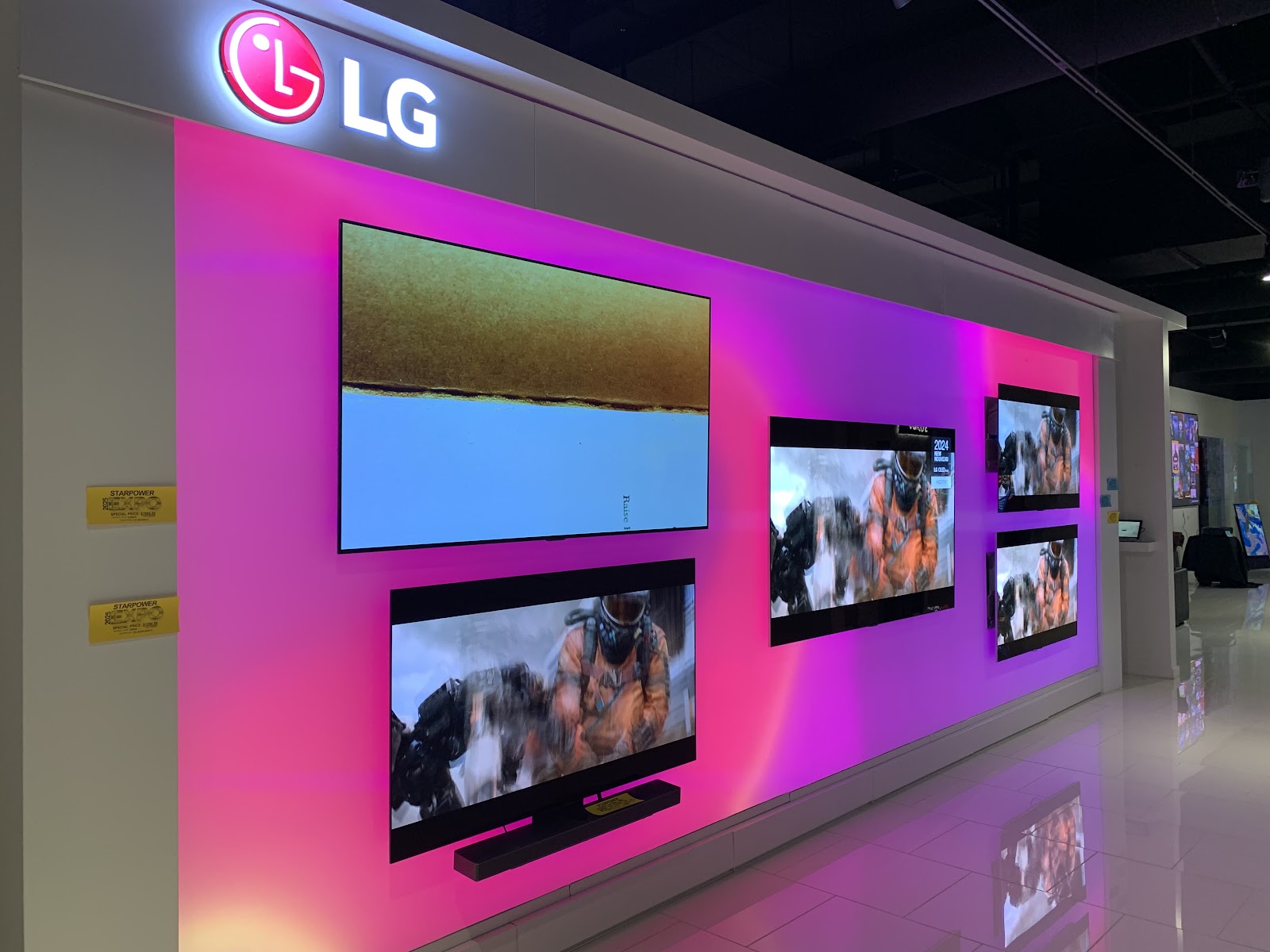
A showroom comparison gives you a better read on brightness, color and reflections than online photos can.
This is where a showroom demo helps. Online reviews can measure peak brightness, but they can’t recreate your room at 3 p.m. or show how a screen handles a wall of windows behind the sofa. In our Dallas and Southlake showrooms, a side-by-side look can make the tradeoff clear in minutes.
The hot take: many buyers overpay for the “highest-end” panel and underinvest in the environment around it. The right lighting control, motorized shades and placement can make a premium TV perform like a premium TV. Without that, even an excellent display may look washed out or reflective.
Should you wait for Micro RGB before buying a new TV?
You do not need to pause every project for Micro RGB. You should pay attention to it, especially if you like being early to major display shifts.
Micro RGB is compelling because it attacks one of LCD’s big challenges: creating strong brightness and rich color at the same time. If the best 2026 models deliver on that promise, they may be a serious option for large, bright rooms where OLED is not the obvious fit.
But first-generation excitement should not replace a real evaluation. We recommend treating Micro RGB as a “demo before deciding” technology. Compare it with premium OLED and Mini-LED models from brands such as Sony, Samsung and LG. Look at real content, not just the manufacturer’s showcase reel.
“New display technology is worth getting excited about, but I don’t want a client buying a TV because it won a trade-show headline. I want the picture to make sense in the room after it’s mounted, connected and calibrated.”
— David Pidgeon, CEO & President of Starpower
What matters besides the panel?
The display is only one piece of the system. Behind the scenes, five decisions usually determine whether the finished room feels polished or frustrating.
1. Room light
A darker room favors OLED and projection. A bright room often favors Mini-LED or an advanced LCD design. Motorized shades and Lutron lighting scenes can change that equation.
2. Screen size and viewing distance
Bigger is not always better, but too small is a common mistake. A family room, bedroom, patio and dedicated theater each need a different size conversation.
3. Mounting and sightlines
A TV mounted too high can make an expensive display feel uncomfortable. Fireplace installations, ceiling lifts and built-ins need planning before the bracket goes up.
4. Audio
A great picture with thin sound feels unfinished. Depending on the room, we may recommend a soundbar, in-wall speakers, Dolby Atmos, a subwoofer plan or a full surround system.
5. Calibration and control
Premium TVs reward proper setup. Picture modes, source settings, network reliability, Apple TV or Blu-ray routing, control systems and lighting scenes all affect the daily experience.
How should you make the final choice?
Use this simple framework before you buy.
The Starpower 4-part display decision
-
Room first: Is the space bright, dark or mixed-use?
-
Content second: Movies, sports, gaming, streaming, art mode or all of the above?
-
Size third: What screen size fits the seating distance and wall design?
-
System last: How will audio, lighting, shades, networking and control support the display?
If your answer points to movie performance, put OLED at the top. If it points to daytime use and sports, start with Mini-LED. If it points to large-screen brightness and you like newer technology, add Micro RGB to the demo list.
The product matters. The installation may matter more.
FAQ: OLED vs. Mini-LED vs. Micro RGB in Dallas
Is OLED still worth buying in 2026?
Yes, OLED is still worth buying if you want rich contrast, deep blacks and a movie-focused picture. It is especially strong in rooms where you can control light. For very bright rooms or constant static sports/news graphics, compare it directly with Mini-LED before deciding.
Is Mini-LED better than OLED for sports?
Mini-LED is often better for sports in bright living rooms because it can deliver high brightness for daytime viewing. OLED can still look excellent for sports in a darker room. The better choice depends on light, seating distance and how large you want the screen to be.
What is Micro RGB TV technology?
Micro RGB is an advanced LCD backlight approach that uses red, green and blue light sources to improve color performance while preserving LCD-style brightness. It is not the same as a modular MicroLED video wall. In 2026, we’d compare Micro RGB against premium Mini-LED and OLED models before recommending it.
Should I buy a TV online or see it in a showroom first?
For a premium display, see it in person if you can. A showroom visit lets you compare OLED, Mini-LED and new Micro RGB-style display technology with real eyes, not just review charts. It also gives you a chance to discuss mounting, lighting, audio, control and installation.
Can Starpower help choose and install the right TV technology?
Yes. Starpower helps homeowners compare premium displays from brands such as Sony, Samsung and LG, then designs the supporting system around the room. That can include home theater audio, lighting control, motorized shades, networking, mounting, calibration and smart home control.
Final expert takeaway
If you’re choosing a TV in 2026, don’t start with the newest acronym. Start with the room. OLED, Mini-LED and Micro RGB can all be the right answer when the display, lighting, audio and installation are designed together.
Visit a Starpower showroom or schedule a consultation to compare premium displays firsthand and plan a system built around how you actually watch.
