
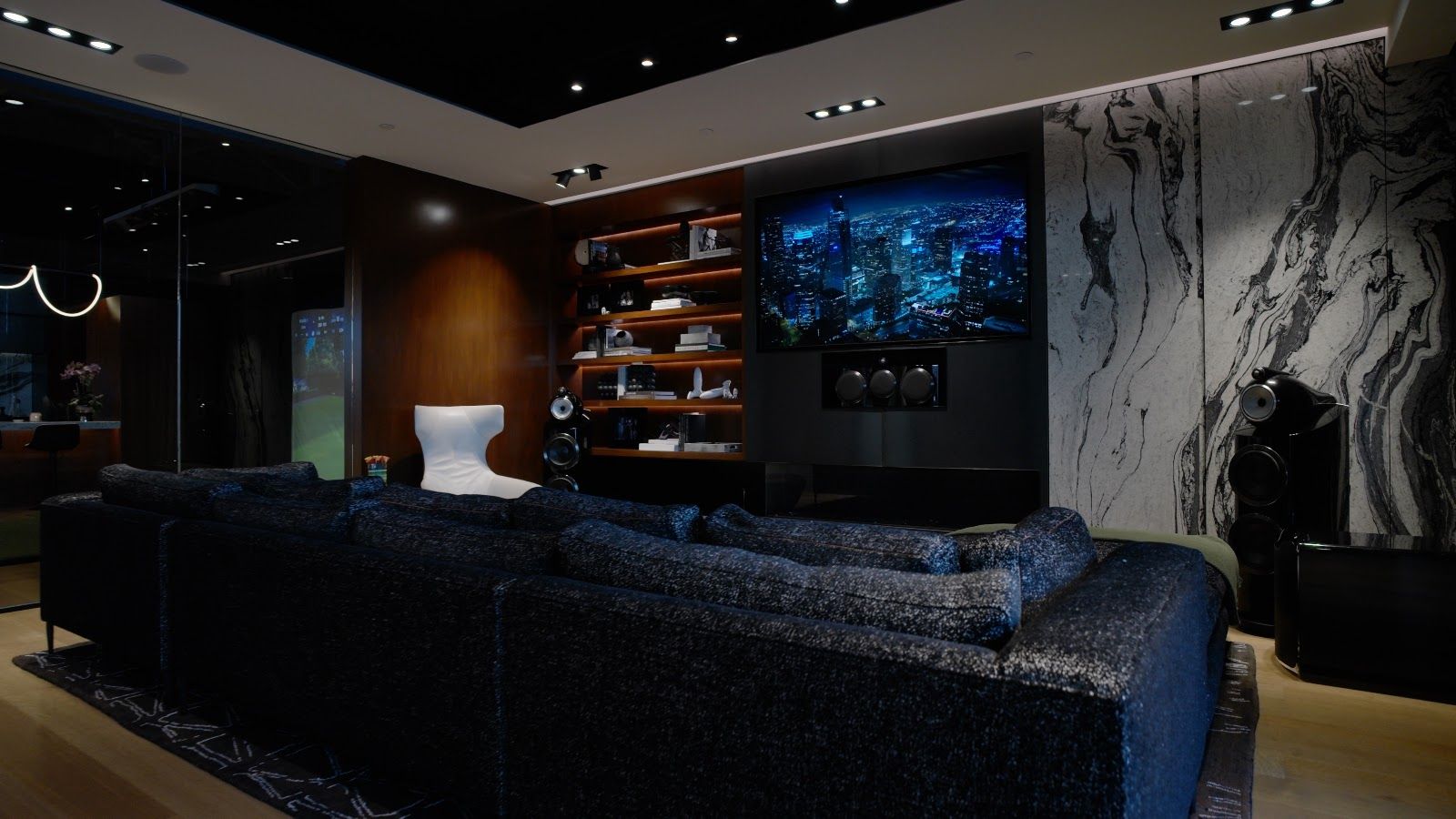
Compare media rooms and dedicated home theaters, with practical guidance from Starpower on choosing the right entertainment space for your home.
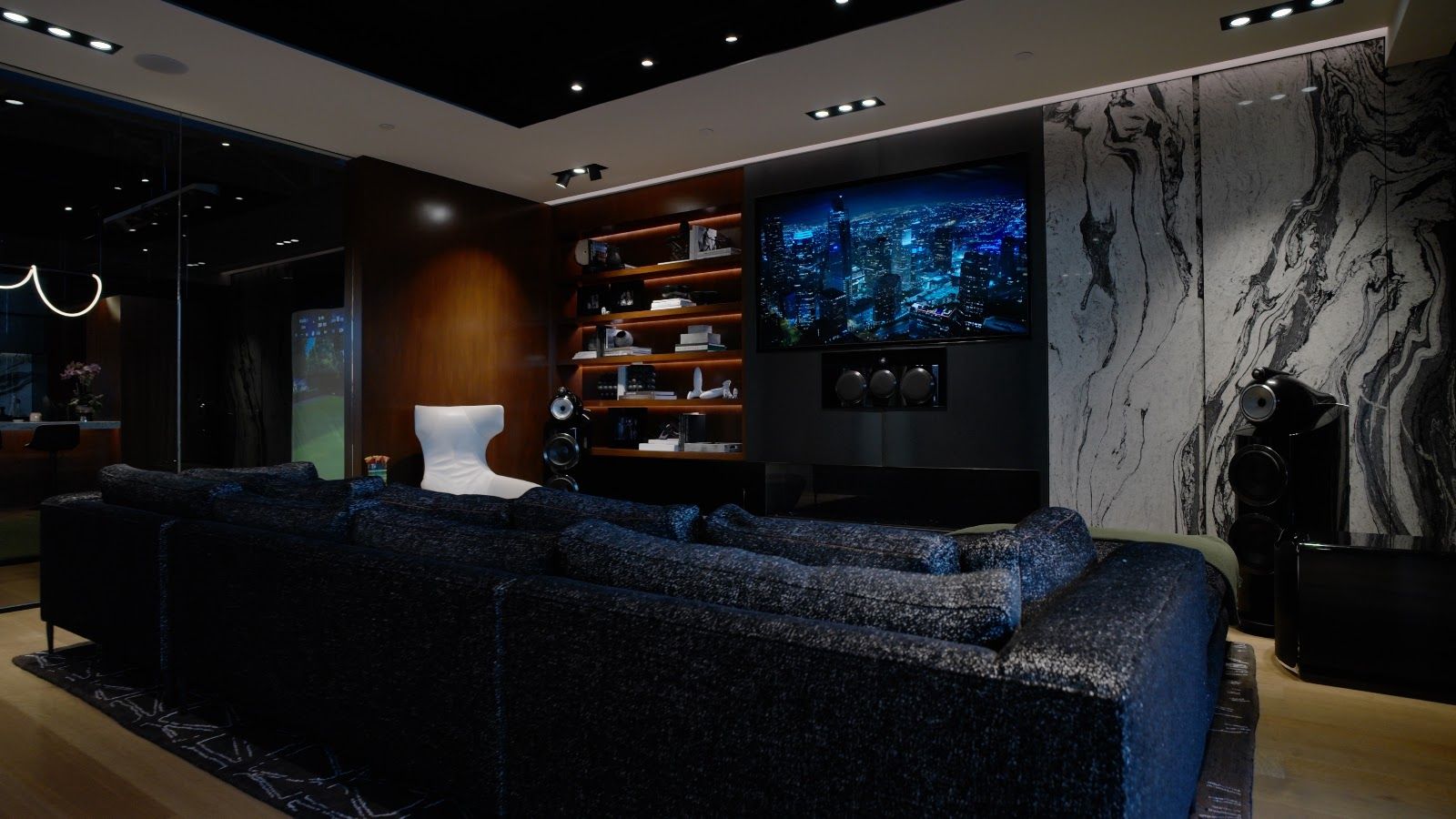
A performance-focused media room can still feel polished, comfortable, and connected to the rest of the home.
Media room vs. dedicated home theater is one of the smartest questions to ask before buying a screen, speakers, or seating. The room itself will decide more about the experience than any single product. A beautiful display in the wrong space can still disappoint; a well-planned room can make movies, sports, and everyday TV feel effortless.
Direct answer: Choose a media room if you want one flexible space for movies, sports, gaming, music, and casual entertaining. Choose a dedicated home theater if you can reserve a controlled room for the best picture, sound, seating, and lighting. For many homes across the Metroplex, the right answer is not “which is better?” It is “which room will your family actually use the way it was designed?”
What is the real difference between a media room and a dedicated home theater?
A media room is a shared entertainment space. It may be a family room, game room, upstairs bonus room, or open living area with a large TV, hidden speakers, lighting scenes, smart shades, and simple controls. It needs to look good with the lights on and work for more than one activity.
A dedicated home theater is purpose-built for watching. The room is usually enclosed, darker, quieter, and designed around one main screen wall. Seating, speaker placement, projector throw distance, acoustic treatment, lighting, ventilation, and control systems all serve the viewing experience.
Here is the hot take: the dedicated theater is not automatically the “better” choice. We’ve seen flexible media rooms get used every week while impressive theater rooms sit idle because they feel too formal for everyday life. The best room is the one designed around your habits, not someone else’s idea of the ultimate setup.
“The biggest mistake we see is shopping for the screen before deciding how the room needs to behave. Once we understand how the family watches, entertains, and moves through the space, the right theater or media-room plan becomes much clearer.”
— David Pidgeon, CEO & President of Starpower
Which room fits the way you actually watch?
Start with use, not equipment. If the room needs to handle Saturday football, kids gaming, background music, and guests walking in and out, a media room is usually the more practical answer. If the room is for focused movie nights, concert films, prestige TV, and the occasional playoff game with the lights low, a dedicated theater earns its place.
Use this quick filter:
-
Choose a media room if you want conversation, flexibility, natural light, multi-purpose furniture, and a room that still feels like part of the home.
-
Choose a dedicated theater if you want fewer compromises, darker walls, controlled light, acoustic planning, tiered seating, and a more cinematic mood.
-
Consider a hybrid room if you want a clean living-space look with theater-grade audio, automated shades, lighting scenes, and a display that performs well day and night.
Behind the scenes, the biggest difference is control. In a dedicated theater, we can control light, reflections, speaker locations, and seating angles from the start. In a media room, our work is often about hiding performance inside a space that still needs to feel relaxed and beautiful.
How do media rooms and dedicated theaters compare?
|
Decision point |
Media room |
Dedicated home theater |
|
Best for |
Sports, streaming, gaming, casual entertaining, everyday TV |
Movies, immersive sound, focused viewing, reference-style performance |
|
Room type |
Family room, upstairs lounge, game room, open or semi-open space |
Enclosed room designed around one main viewing position |
|
Lighting |
Needs smart lighting and shades to balance daytime use |
Can use darker finishes, controlled scenes, and very low light |
|
Audio approach |
Often hidden in-wall, in-ceiling, soundbar, or architectural speakers |
More freedom for Dolby Atmos layouts, subwoofers, and acoustic treatment |
|
Design priority |
Blend technology into the room |
Build the room around the experience |
What does a media room need to perform well?
A strong media room is not just a big TV over a console. It needs a thoughtful system that works with furniture, windows, traffic flow, and décor. In our Dallas and Southlake showrooms, we often talk through the full room: where people sit, where sunlight hits, how loud the space can be, and whether the controls need to be simple enough for guests.
The essentials are:
-
A display sized for the main seats, not just the wall
-
Speaker placement that respects the room layout
-
Subwoofer planning so bass feels full without becoming boomy
-
Smart lighting scenes for sports, movies, and casual viewing
-
Motorized shades if windows create glare
-
A reliable network for streaming and control
-
One intuitive remote, keypad, touchscreen, or app experience
Brands such as Sony, Samsung, LG, Bowers & Wilkins, Sonos, Marantz, Denon, Lutron, Crestron, URC, and Josh.ai can all play a role, depending on the room. The product list matters. The design matters more.
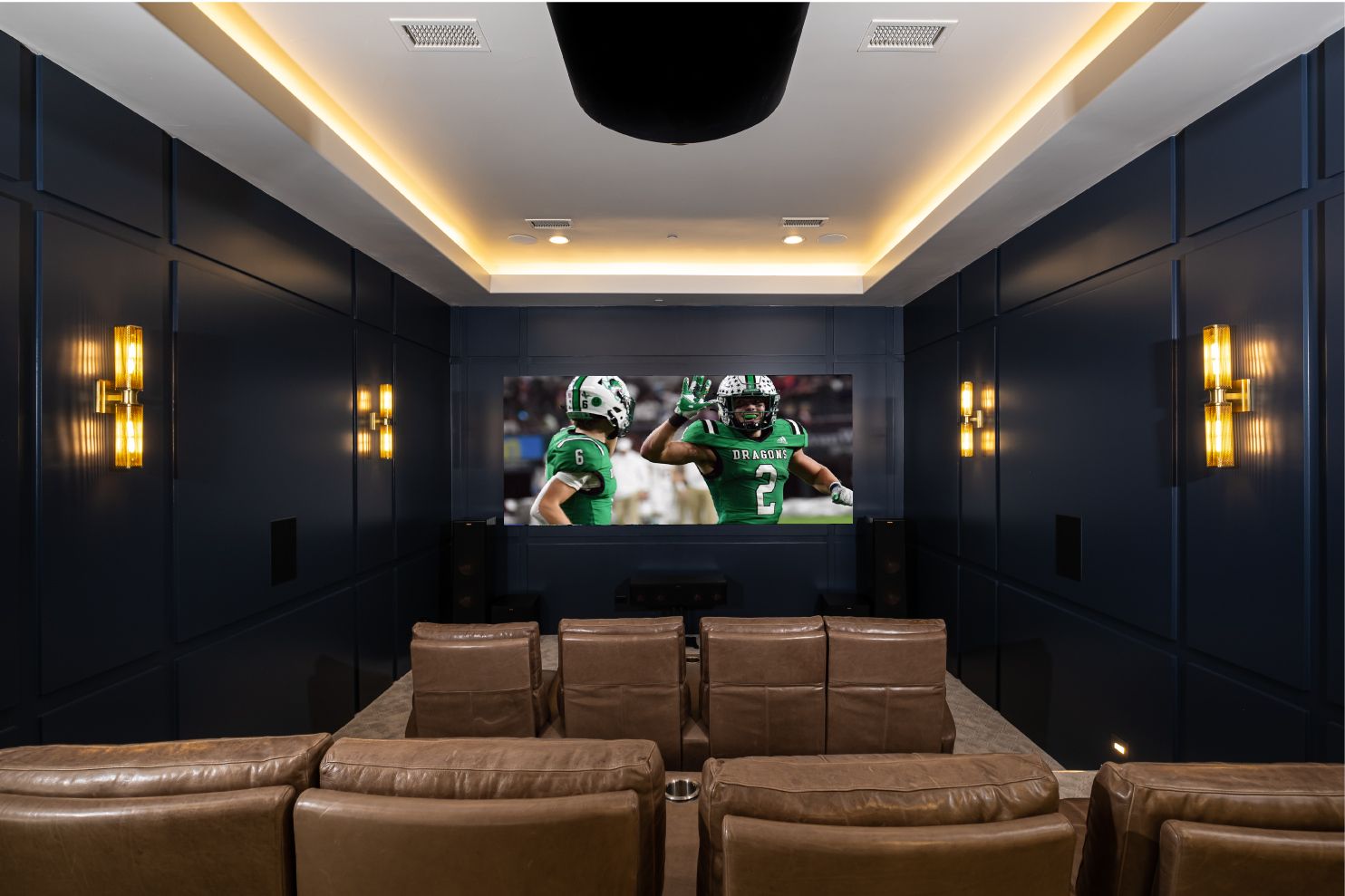
A dedicated theater gives the design team more control over seating, sound, lighting, and picture quality.
When is a dedicated home theater worth it?
A dedicated theater is worth it when you want the room to disappear and the movie, concert, or game to take over. That requires more than a projector and recliners. It takes a room plan.
A proper theater design considers screen size, sight lines, speaker angles, projector placement, acoustic isolation, HVAC noise, lighting zones, equipment ventilation, and control. Seating also changes the experience. The distance from the screen, the height of each row, and the position of every speaker affect whether the room feels immersive or simply loud.
“A great theater should feel easy when you sit down. Behind that ease is a lot of planning: the lighting scene, the audio calibration, the seating distance, the way the controls hand everything to you without making you think about the system.”
— David Pidgeon, CEO & President of Starpower
Our recommendation: if you are building or remodeling and have an enclosed room available, design the theater before drywall. Wiring, speaker locations, projector paths, lighting circuits, and shade pockets are much easier to solve early than after finishes are complete.
What questions should you ask before deciding?
Use this framework before you commit:
-
How often will the room be used? A casual daily room may beat a pristine theater if your family rarely sits down for full movies.
-
Who uses it? Kids, guests, serious movie fans, sports groups, and gamers all ask different things of a room.
-
Can the room control light? Windows do not rule out performance, but they change the plan.
-
Will sound disturb nearby rooms? Bedrooms, nurseries, offices, and neighbors matter.
-
Do you care more about design discretion or maximum performance? Both are valid. They lead to different equipment choices.
-
Is this part of a larger smart home plan? Lighting, shades, climate, security, audio, and video should work together instead of feeling like separate systems.
A common mistake is treating the media room or theater as an equipment purchase. It is really a design decision with technology inside it.
How does Starpower help you choose?
Starpower starts with how you want to live in the space. Our team can help compare a media room, dedicated theater, or hybrid plan, then design the system around the room instead of forcing the room around the gear.
That may include a large-format display or projection system, Dolby Atmos audio, custom seating made in Dallas, Lutron or Ketra lighting, motorized shades, Crestron or URC control, Josh.ai voice control, strong networking, and professional calibration. It may also mean recommending restraint. Not every room needs the most complex system. Some need the cleanest system.
“Our best projects usually begin with one honest conversation: tell us how you want the room to feel on a normal weeknight. From there, we can design something that performs beautifully without overwhelming the home.”
— David Pidgeon, CEO & President of Starpower
FAQ
Is a dedicated home theater better than a media room?
Not always. A dedicated home theater can deliver stronger performance because the room is controlled for picture, sound, and seating. A media room may be better if you want one space for sports, streaming, gaming, and entertaining.
What is the best room for a home theater?
The best room is enclosed, quiet, and able to control light. Rectangular rooms are often easier to plan than open or irregular spaces. If you are building or remodeling, involve a home theater designer early so wiring, lighting, speaker locations, and seating can be planned before finishes are installed.
Can a media room still have surround sound?
Yes. A media room can include in-wall or in-ceiling speakers, a subwoofer, Dolby Atmos, smart lighting, shades, and simple control. The design usually has to balance performance with the room’s everyday look and furniture layout.
Should I choose a projector or a large TV?
For dedicated theaters, projection can create a more cinematic scale when the room is dark and properly planned. In brighter media rooms, premium OLED, Mini LED, or large-format displays from brands such as Sony, Samsung, and LG may be the better fit. The right answer depends on screen size, ambient light, seating distance, and how the room is used.
Where can I compare media room and dedicated theater options in Dallas?
Visit a Starpower showroom in Dallas, North Dallas, or Southlake to experience different display, audio, lighting, seating, and control options in person. You can also schedule a consultation with Starpower at (972) 503-6000 to plan a system tailored to your space.
