
Learn how Lutron and Ketra tunable lighting can support comfort, wellness, and better scenes at home. Starpower designs lighting in Dallas-Fort Worth.
Most homes are lit for one moment: bright enough to see. That’s the problem. The way a room should feel at 7 a.m. is not the way it should feel during dinner, a movie, or the last hour before bed.
Circadian lighting uses tunable light intensity and color temperature to better follow the natural rhythm of the day. In a well-designed home, Lutron and Ketra lighting can support comfort, focus, relaxation, and visual warmth by shifting from brighter, cooler light in active hours to softer, warmer light in the evening. The real value comes from design, scene programming, daylight control, and professional installation—not from swapping in a few smart bulbs.
Lutron’s own luxury residential lighting research points to a clear shift: homeowners are thinking about light as part of mood, wellness, and personalization, not only decoration. Dataintelo also estimates the global circadian lighting market at $4.8 billion in 2025, with projected 11.9% annual growth from 2026 to 2034. Those numbers do not mean every home needs a laboratory-grade lighting plan. They do mean interest is moving quickly from “nice upgrade” to “serious design conversation.”
“In our showroom conversations, people rarely ask for circadian lighting first. They describe the problem: the kitchen feels harsh at night, the bedroom never feels calm, or the great room looks flat after sunset. That is where tunable lighting becomes practical.”
— David Pidgeon, CEO & President of Starpower
What is circadian lighting, and why is it different from regular dimming?
Circadian lighting is a lighting approach that changes throughout the day to better align with how people naturally respond to daylight. It usually combines two adjustments:
-
Intensity: how bright the light is.
-
Color temperature: how warm or cool the light appears.
Regular dimming only lowers brightness. That helps, but it does not solve everything. A dimmed cool-white light can still feel sterile at night. Tunable lighting lets the system move toward a crisper daylight feel when you want energy and task visibility, then shift warmer when the home should feel relaxed.
Ketra, a Lutron brand, is built around high-quality dynamic light. Lutron describes Ketra as a way to replicate natural light more faithfully than a typical LED source, with control over dimming, color temperature, and color rendering. In plain English: the room can look more natural at breakfast, more flattering for entertaining, and calmer later in the evening.
That matters in luxury homes because light touches every surface. Stone, wood, art, upholstery, cabinetry, and skin tones all change under different light. One thing most people do not realize is that the same beautiful finish can look expensive under one light source and dull under another.
Why is circadian lighting in Dallas becoming a stronger wellness trend?
Circadian lighting in Dallas is gaining interest because homeowners are investing more in spaces that feel better to live in every day. Wellness at home used to mean a gym, a steam shower, or cleaner air. Now lighting belongs in that same conversation.
There is also a local lifestyle reason. Across the Metroplex, homes often balance large windows, bright sun, shaded patios, open living spaces, and rooms used at very different times of day. A breakfast room may need crisp light before school. The same connected kitchen may need a warmer scene for dinner. A media room may need low, controlled lighting that does not wash out the screen. Bedrooms need a calmer feel at night.
The hot take: the fixture is often not the most important decision. The control strategy is.
A striking pendant or recessed fixture still matters. But without the right dimming, keypad scenes, shade integration, and programming, even a premium fixture can feel wrong in daily use. Behind the scenes, what really matters is how the lighting system behaves when real people walk into the room and press one button.
How do Lutron and Ketra work together in a whole-home lighting plan?
Lutron provides the control backbone: keypads, dimming, lighting scenes, motorized shades, and whole-home coordination. Ketra provides tunable, high-quality light sources that can shift in color and intensity. Together, they let a home move through the day with less manual adjustment.
A Starpower lighting design might include:
-
Morning scenes with brighter, cooler light in active spaces like the kitchen, bath, closet, and home office.
-
Daytime scenes that balance electric light with natural daylight and motorized shades.
-
Entertaining scenes that warm the room, highlight architectural details, and reduce glare.
-
Evening scenes that lower intensity and shift warmer in bedrooms, hallways, and living areas.
-
Movie or goodnight scenes tied into home theater, shades, security, and climate control where appropriate.
The goal is not to make the home feel automated for the sake of it. The goal is to make the right setting easy to use. In our experience, if a lighting system requires constant phone adjustments, the design missed the point. The best systems give you simple keypads and a few scenes that match real routines.
Which rooms benefit most from tunable lighting?
Not every room needs the same lighting investment. A smart plan puts the most dynamic control where it will be felt most.
|
Room |
Best use for tunable lighting |
Common mistake |
|---|---|---|
|
Kitchen |
Bright task light for prep, warmer scenes for dinner and entertaining |
Using one overhead setting for every activity |
|
Primary bedroom |
Soft evening light, gentle nighttime paths, calmer reading scenes |
Choosing fixtures before deciding how the room should feel at night |
|
Living room |
Layered ambient, accent, and art lighting that changes with the day |
Relying on recessed lights alone |
|
Home office |
Clear daytime light for focus, lower glare for video calls and evening work |
Ignoring window glare and shade control |
|
Home theater or media room |
Low pathway lighting, pre-show scenes, and screen-friendly dimming |
Letting bright downlights reflect on the display |
|
Closet and dressing areas |
Better color rendering for clothing, finishes, and mirror lighting |
Using light that distorts color |
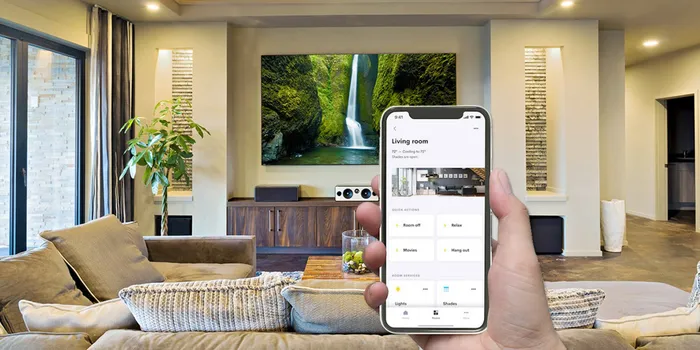
Caption: Lighting works best when scenes are easy to control from a keypad, touchscreen, or app.
What should homeowners decide before installing tunable lighting?
Start with how the home should feel, not with a product list. That sounds simple, but it changes the project.
Use this five-part checklist before choosing fixtures, controls, or scenes:
-
Map the daily rhythm. Which rooms are used in the morning, after school, for work, for entertaining, and before bed?
-
Identify surfaces that need flattering light. Art, stone, wood floors, cabinetry, and wall colors all respond differently.
-
Plan layers, not rows. Ambient, task, accent, and decorative lighting should each have a job.
-
Coordinate shades early. Daylight and glare affect how electric lighting performs, especially in rooms with large windows.
-
Decide who needs simple control. Keypads should be clear enough for family, guests, and house managers to use without explanation.
“My recommendation is to design the scenes before the walls are closed, especially in a new build or major remodel. If we know how the family wants mornings, dinners, movie nights, and bedtime to feel, the wiring, keypad locations, and fixture choices become much smarter.”
— David Pidgeon, CEO & President of Starpower
For existing homes, the planning is different but still very workable. Some Lutron and Ketra solutions are designed with wireless control options, which can reduce the need for major rewiring in the right application. A professional walkthrough helps determine what can be upgraded cleanly and what should wait for a remodel phase.
Is circadian lighting worth it for a luxury home?
Circadian lighting is worth considering when you care about comfort, design quality, and how the home feels at different times of day. It is probably not worth doing as a scattered gadget upgrade.
Here is the honest distinction:
-
Worth it: primary living spaces, bedrooms, kitchens, offices, art-focused rooms, and homes already using lighting control or motorized shades.
-
Less compelling: rooms that are rarely used, utility spaces, or projects where the lighting layout itself is still poor.
-
Best value: new construction and remodels where Starpower can coordinate with the builder, architect, interior designer, and electrician before decisions are locked.
The biggest mistake we see is treating tunable lighting as a bulb choice. It is a system decision. The fixture, light source, control platform, shade plan, keypad placement, and scene programming all affect the final result.
How does Starpower design lighting that feels natural?
Starpower begins with the room, the routine, and the experience the client wants. That includes practical questions: Where does glare show up? Which surfaces should be highlighted? Does the client entertain often? Is the room open to a kitchen or patio? Will shades be part of the same control system?
From there, our team can design around Lutron lighting control, Ketra tunable lighting, motorized shades, and smart home platforms such as Crestron, URC, or Josh.ai where they fit the larger project. The result should feel polished, not complicated.
A well-programmed keypad might include scenes such as Cook, Dinner, Entertain, Movie, Relax, and Goodnight. Those labels matter. People use plain-language scenes. They ignore technical ones.
The same thinking applies in our Dallas and Southlake showrooms. Seeing tunable light in person is different from reading about it because your eyes can feel the shift. You can compare warm, cool, dimmed, and layered scenes in real space instead of guessing from a catalog.
What questions should you ask before choosing a circadian lighting system?
Before you commit, ask better questions than “Which brand is best?”
The Starpower decision framework
-
Fit: Does the lighting plan match the way you live, entertain, work, and wind down?
-
Control: Can everyone in the home use the scenes without needing an app every time?
-
Design quality: Will the light flatter the architecture, finishes, art, and furniture?
-
Integration: Should shades, home theater, security, or climate be tied into the same scenes?
-
Long-term support: Who will adjust scenes after move-in when real routines become clear?
That last point is important. A lighting system is not always perfect on day one because people need to live with it. Fine-tuning after installation is part of making the system feel personal.
FAQ: Circadian and tunable lighting at home
Does circadian lighting actually improve sleep?
Lighting can support better evening routines by lowering brightness and shifting warmer before bed, but it should not be treated as a medical promise. The practical benefit is that the home can reduce harsh light at night and create a calmer environment. For sleep concerns, homeowners should rely on medical guidance, with lighting as one part of a broader routine.
What is the difference between tunable white and full-color lighting?
Tunable white lighting changes from warm white to cool white. Full-color lighting can also create colored light. For most luxury interiors, tunable white and high-quality color rendering matter more than dramatic color effects, though accent color can be useful in entertainment spaces.
Can Lutron and Ketra lighting be added to an existing home?
Often, yes, depending on the current wiring, fixtures, ceiling access, and control goals. Some systems offer wireless options that may work well in remodels or selective upgrades. Starpower can evaluate whether a room-by-room upgrade or a larger lighting plan makes more sense.
Is circadian lighting only for modern homes?
No. Traditional, transitional, and contemporary homes can all benefit from better light quality and scene control. The visible fixtures can match the architecture while the lighting behavior still changes throughout the day.
Where can I see circadian lighting in Dallas-Fort Worth?
You can experience lighting control, Ketra-style tunable lighting concepts, motorized shades, and smart home scenes in a Starpower showroom. Seeing the difference in person is the fastest way to understand how much lighting changes the feel of a room.
Final expert takeaway
Circadian lighting is not about chasing a trend. It is about designing a home that feels better in the morning, more flattering when guests arrive, and calmer when the day is done.
If you are building, remodeling, or rethinking the way your home feels after dark, visit a Starpower showroom or schedule a consultation with our team. We’ll help you design a lighting and control plan around the way you actually live.
