
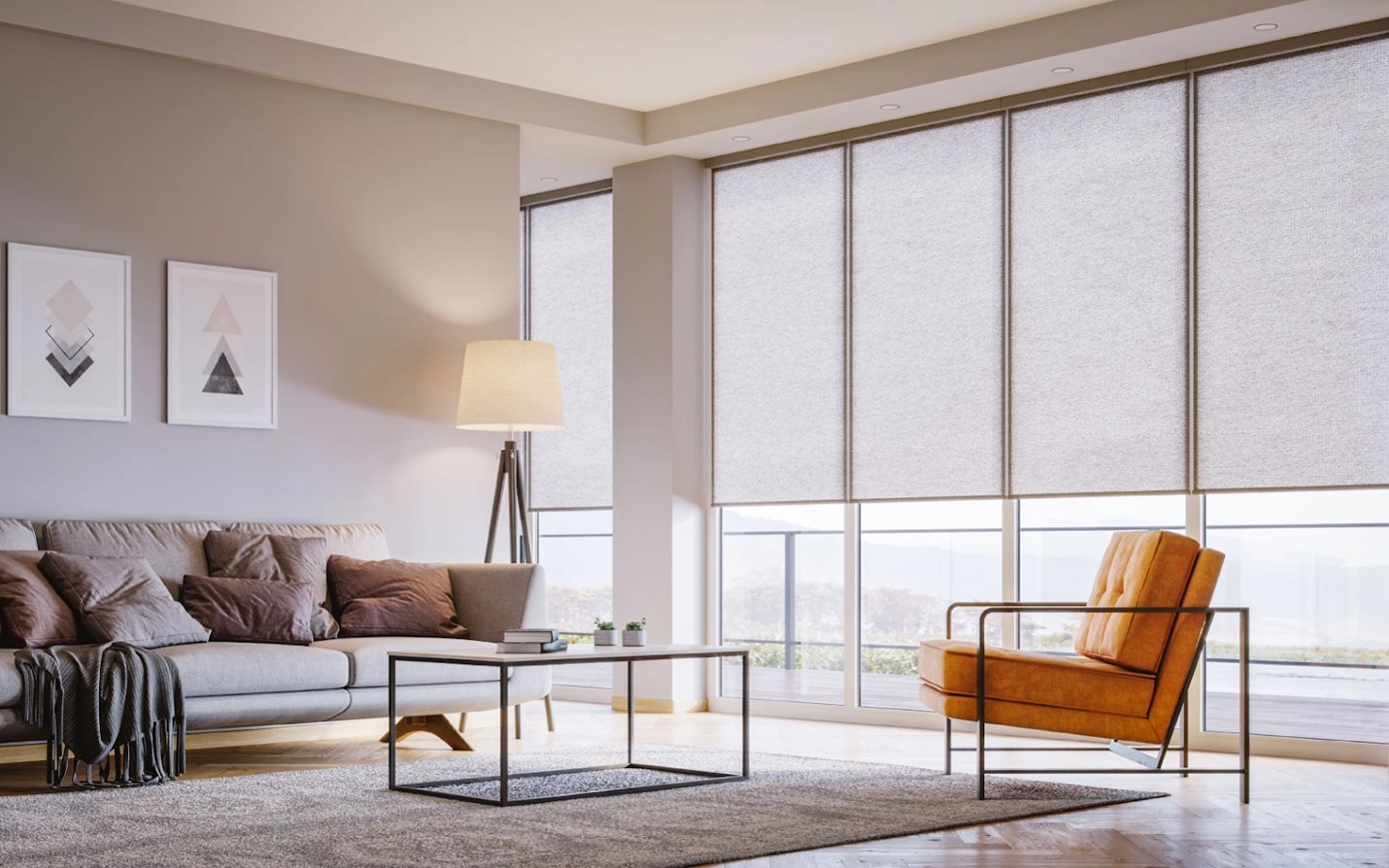
Are motorized shades worth it? See when smart shades pay off for Dallas homes through comfort, glare control, privacy, and design protection.
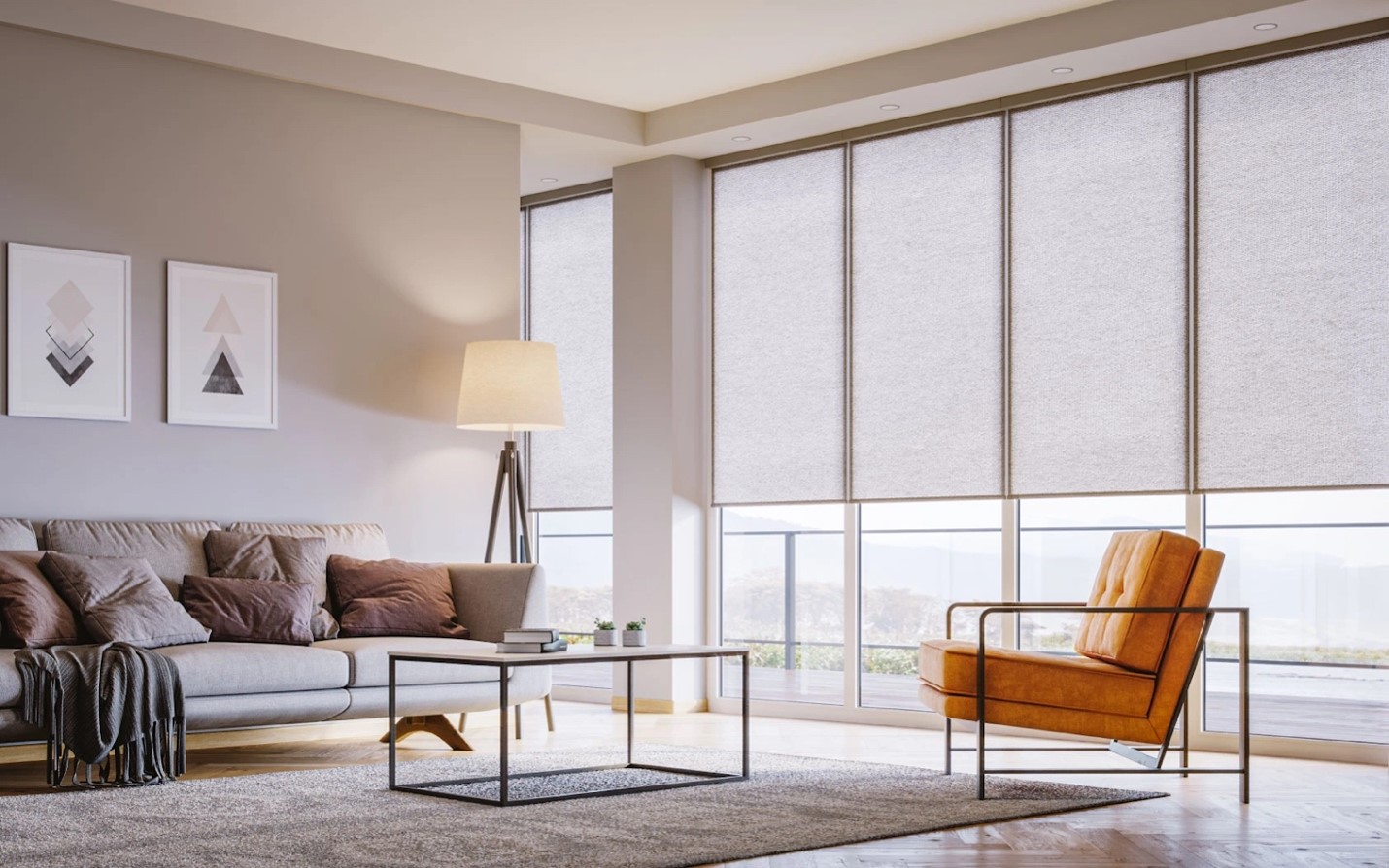
Motorized roller shades in a modern living room
Caption: Motorized roller shades give a bright living room precise control over sun, privacy, and glare.
The honest answer: motorized shades are worth the cost when the windows are large, hard to reach, exposed to strong afternoon sun, or part of a larger lighting and smart home plan. They are less compelling if you only need one small window covered and you rarely adjust it.
For luxury homes here, the value usually shows up in daily comfort. Rooms stay usable during harsh sun, furniture and floors get better protection, and the home feels calmer because shades move on a schedule instead of becoming another chore.
Direct answer: Motorized shades are worth it if they solve a real problem: heat, glare, privacy, UV exposure, hard-to-reach windows, or whole-home control. The biggest mistake is pricing them like ordinary window coverings; the better comparison is comfort, design protection, and how often the shades will work for you automatically. In our Dallas and Southlake showrooms, we recommend them most often for large glass, west-facing rooms, primary bedrooms, home theaters, outdoor living areas, and homes already using Lutron, Hunter Douglas, Crestron, or other smart control systems.
Why do motorized shades cost more than regular shades?
A manual shade is fabric and hardware. A motorized shade adds a motor, power planning, controls, programming, installation, and often integration with lighting, climate, audio/video, or security.
That is why the lowest quote is rarely the best lens. The shade has to fit the window, align cleanly, move quietly, and respond reliably. Behind the scenes, what really matters is the combination of fabric selection, power source, mounting detail, keypad or app control, and programming.
Lutron describes its residential shade lines as including Serena, Triathlon, and Sivoia options for different installation needs. Hunter Douglas describes PowerView Automation as a way to move shades on a schedule. Wirecutter’s 2026 smart shade coverage also lists Lutron Serena as an upgrade pick, pointing to strong hardware and software. Those details matter because the motor and control platform are not afterthoughts; they shape the experience every day.
"The value of motorized shades is not only the motor. It is the way the fabric, power, controls, and schedule are designed together so the room feels right at 4 p.m. in July without anyone touching a switch." — David Pidgeon, CEO & President of Starpower
Are motorized shades worth it for heat, glare, and privacy?
Yes, especially in rooms with big windows or direct afternoon exposure. Across the Metroplex, the sun can make a beautiful room uncomfortable at exactly the time you want to use it. A west-facing family room may look perfect in the morning and become nearly impossible for TV, reading, or entertaining by late afternoon.
Motorized shades help because they are consistent. You can schedule them to lower before the room heats up, raise them when glare is no longer a problem, and close them for privacy at night.
The practical benefits usually fall into five categories:
-
Glare control: TV rooms, offices, kitchens, and living rooms become easier to use.
-
Heat management: Shades can reduce direct solar gain before the room feels hot.
-
Privacy: Bedrooms, bathrooms, and street-facing rooms can close at the same time every evening.
-
Design protection: Fabrics, wood floors, rugs, and artwork get less direct UV exposure.
-
Convenience: Tall, wide, or repeated windows stop being a daily manual task.
-
Our recommendation is simple: if you already adjust the same shades every day, motorization is probably worth considering. If a shade sits untouched for weeks, it may not be the first place to invest.
Which rooms benefit most from motorized shades?
Start with the rooms where the sun affects comfort or where manual shades are inconvenient.
|
Room or area |
Why motorized shades help |
Best use case |
|
Living room |
Controls glare, privacy, and heat without interrupting the room |
Large windows, open plans, afternoon sun |
|
Primary bedroom |
Automates morning light and evening privacy |
Blackout or room-darkening scenes |
|
Home theater or media room |
Protects picture quality by reducing unwanted light |
Movie night, sports, gaming, projector rooms |
|
Home office |
Reduces screen glare during work hours |
Video calls, desk glare, west-facing windows |
|
Outdoor living area |
Adds shade, privacy, and comfort around patios and pools |
Entertaining, outdoor TV, covered patios |
What is the biggest mistake people make with motorized shades?
They choose the shade before designing the control plan.
That sounds backward at first. Fabric matters, of course. Color, opacity, texture, and openness all affect the room. But we often see homeowners focus only on the material sample and forget the daily experience: How will the shades be powered? Will they respond from a keypad? Do they need to work with lighting scenes? Should the bedroom shades rise gradually in the morning? Should the patio shades lower before sunset?
A good motorized shade plan answers those questions before anything is ordered.
What should you decide before buying?
Use this quick framework:
-
Sun problem: Which windows cause heat, glare, fading, or privacy concerns?
-
Fabric goal: Do you want sheer, light-filtering, room-darkening, or blackout performance?
-
Control style: Do you prefer keypads, remotes, app control, voice control, schedules, or a mix?
-
Power plan: Is battery, low-voltage wiring, or hardwired power the best fit for the home?
-
Integration: Should shades work with lighting, climate, security, audio/video, or scenes?
-
Design detail: Will the shade mount inside the window, outside the trim, or in a pocket?
The last two items are where professional planning matters most. In new construction and remodels, the cleanest result often comes from deciding early, while wiring and window details can still be coordinated with the builder, architect, or designer.
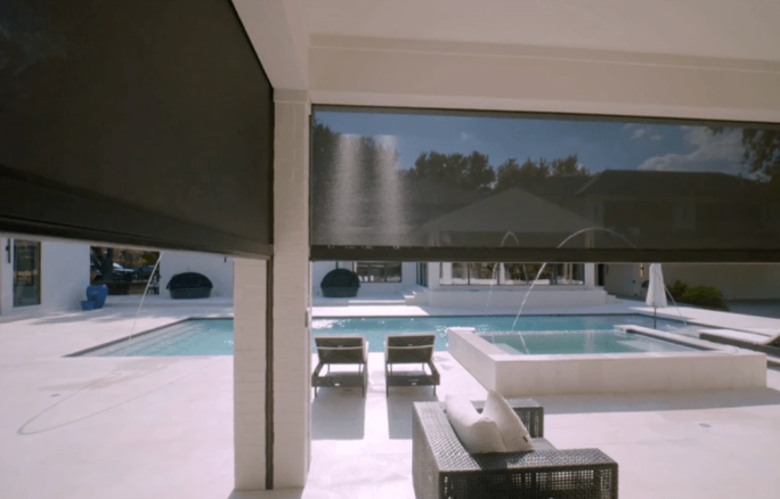
Outdoor motorized shades overlooking a pool and spa
Caption: Outdoor motorized shades can make a covered patio more comfortable for entertaining, watching TV, or relaxing by the pool.
Are Lutron and Hunter Douglas motorized shades good choices?
They can be excellent choices when matched to the right room and control needs. Starpower installs Lutron and Hunter Douglas motorized shades because both brands offer established options for automated window treatments, including app and schedule-based control.
Lutron is often a strong fit when shades are part of a larger lighting control plan. If you want one keypad scene for dinner, movie night, away mode, or bedtime, the shade decision should be made with the lighting decision.
Hunter Douglas is often appealing when the window treatment style itself is a priority, including a broad range of shade types and fabrics. PowerView Automation is built around scheduled movement and smart control.
The better question is not "Which brand is best?" It is "Which system fits this home, these windows, and the way you want to live?"
"We do not start by asking, 'What motor do you want?' We start with the room: where the sun hits, how the family uses the space, and what the designer wants the window to look like when the shade is up or down." — David Pidgeon, CEO & President of Starpower
When are motorized shades not worth the cost?
Motorized shades are not automatically the right answer for every window.
They may not be worth the investment if:
-
The window is small and easy to reach.
-
The shade rarely needs to move.
-
There is no meaningful heat, glare, privacy, or design-protection issue.
-
The room is temporary or likely to be redesigned soon.
-
A manual treatment solves the problem cleanly.
That is the hot take: the best motorized shade project is not always the biggest one. It is the one where automation removes a daily annoyance or protects a room you care about.
For many homes, that means starting with the highest-impact areas first: family room, primary bedroom, media room, home office, kitchen, or covered patio.
How should you budget for motorized shades?
Think in layers, not just per-window price.
A motorized shade project can include:
-
Shade fabric and style
-
Motor type
-
Battery, wired, or low-voltage power
-
Remotes, keypads, processors, bridges, or hubs
-
Installation labor
-
Programming and scene setup
-
Coordination with lighting, control, or security systems
If you are building or remodeling, bring the shade conversation in early. Prewiring may create a cleaner, more reliable result than trying to solve power after walls and trim are finished. If the home is already complete, battery or retrofit-friendly options may still work well, depending on window size and usage.
What is our final recommendation?
If you are asking whether motorized shades are worth it, walk through the room at the worst time of day. Not the prettiest time. The worst one.
Is the TV washed out? Is the room hot? Are you closing the same shades every afternoon? Do you avoid sitting near a window? Are you worried about fading floors, rugs, or furniture? If yes, motorized shades deserve a serious look.
"My recommendation is to automate the rooms where the shades will actually move. A well-designed system should feel natural after the first week — not flashy, not complicated, just quietly useful." — David Pidgeon, CEO & President of Starpower
Starpower can help you compare fabrics, motor options, controls, Lutron and Hunter Douglas solutions, and the best installation approach for your home. Visit a Starpower showroom in Dallas or Southlake, or call (972) 503-6000 to schedule a consultation with our team.
FAQ: Are motorized shades worth the cost?
Do motorized shades increase home value?
They can add perceived value in the same way other well-integrated smart home features do: by making the home feel more polished, comfortable, and easier to live in. We would not recommend buying them only for resale. Buy them for rooms where daily comfort, privacy, and light control matter.
Are motorized shades good for large windows?
Yes. Large windows are one of the strongest reasons to choose motorized shades because manual operation can be awkward, heavy, or inconsistent across multiple openings. Motorization also helps large glass look cleaner because the shades can move together.
Can motorized shades work with smart home systems?
Yes. Depending on the product and system design, motorized shades can work with platforms such as Lutron, Hunter Douglas PowerView, Crestron, URC, and other home control systems. The key is planning the control system before ordering the shades.
Are battery-powered motorized shades reliable?
Battery-powered shades can work well in many retrofit situations, especially when wiring is not practical. The tradeoff is battery maintenance. For new construction, remodels, very large windows, or high-use rooms, wired power may be worth discussing.
Should I install motorized shades myself?
For one simple window, some products are designed for consumer installation. For luxury homes, large windows, integrated lighting scenes, outdoor shades, or multiple rooms, professional design and installation are the safer route. Fit, power, alignment, programming, and long-term service all matter.
